Showing posts with label Swedish Jazz. Show all posts

Friday, October 21, 2016

New Reissues: Jan Lundgren Trio Plays the Music of Victor Young

Last month, the newly formed Fog Arts label began what is an ongoing series of digital reissues of Jan Lundgren albums that have been long out of print due to the demise of the record label for which they were originally cut. The first two are songbook packages that concentrate on the work of Victor Young and Jule Styne, two great composers who aren't usually the subject of such full-length projects by jazz musicians. A third album of Duke Ellington and Billy Strayhorn tunes is slated for release next month, and it's our intention to devote one Jazz Flash to each of these and other forthcoming Lundgren reissues, beginning with The Jan Lundgren Trio Plays the Music of Victor Young. By the time the Lundgren-led trio (with Mattias Svensson on bass and Rasmus Kihlberg on drums) entered the studio in Copenhagen in 2000 and 2001 to record this tribute to Young, one of the most celebrated film composers of all time, the Swedish pianist was well established, with a series of fine albums (Swedish Standards, Cooking! At the Jazz Bakery, Something to Live For) and collaborations with legendary jazzmen such as Herb Geller, Bill Perkins, Conte Candoli, and Arne Domnérus, to cite just a few. Lundgren had traveled to the U.S. to perform and had recorded twice in NYC. After cutting a whole CD of Ellington originals for the now-defunct Sittel label, he began to concentrate on the work of Great American Songbook songwriters who don't usually receive as much attention as the Gershwins, Porters, Mercers, etc., and thus this album was born. The idea was, it seems, to focus on both Young's well-known songs and some more obscure items from his prolific output. As it happened, it didn't prove to be an easy task, as Lundgren himself has noted: "I couldn't unearth any modern sheet music songbooks for either composer [he refers to Styne as well], and Young was particularly neglected. I found that curious—and a little bit shocking . . . Yet I also found it appealing, because I wanted to play songs by writers who hadn't been done to death by everyone else."


Swedish pianist Jan Lundgren
Lundgren was fortunate to be able to enlist the help of three excellent American artists—singers Stacey Kent and Deborah Brown, who handle the vocals on several of the tracks, and, particularly, the outstanding tenor saxophonist Johnny Griffin. They were all apparently touring European cities at the time and joined Lundgren's trio in Denmark on some of these sessions, to which they contributed in a major way. New Jersey-born Kent bookends the album with pensive readings of the classic ballads "Ghost of a Chance" and "My Foolish Heart," and she's also featured on a bouncy "Street of Dreams." Brown, who's from Kansas City, approaches the beautiful "A Hundred Years from Today" in a delicate manner, very much in tune with Lundgren's piano on that track, and then hastens the tempo on "Beautiful Love" and a scat-filled "Stella by Starlight." Griffin, one of the greatest tenorists in jazz history, shows off his mastery on two very different selections: the uptempo "A Weaver of Dreams," possibly inspired by the John Coltrane version, and the heartfelt ballad "When I Fall in Love," which taps into Griffin's most intimate persona. The latter is one of the highlights from the album, prompting these telling words from Lundgren: "When we'd finished the take, I noticed a tear in the corner of [Griffin's] eye. 'I was thinking of Ben,' Johnny quietly told me, referring of course to the great Ben Webster. It was a very emotional moment." And it is, indeed, a rendition that would have made the Brute proud!


Johnny Griffin
The trio is featured on the other five songs, which again range from Young classics to lesser-known compositions. Lundgren's piano shines on the uptempo "Sweet Sue (Just You)," one of Young's most enduring offerings, and "Love Letters" is given a Latin treatment that proves to be a good vehicle for Svensson's bass. "Song of Delilah" may sound like an odd choice at first, but its hip R&B arrangement actually turns it into one of the most memorable moments on the album. Very few probably remember the Ray Milland movie for which Young wrote "Golden Earrings," but the tune is lovely, and Lundgren treats it gently and with quite a bit of easy-going swing. Finally, "Alone at Last" is another of those obscurities that Lundgren is so adept at digging up, a film ballad that lends itself perfectly to the trio's relaxed approach. Overall, this is undoubtedly one of the best entries in Lundgren's ever-growing discography, and true jazz fans should be thankful to Fog Arts for making its content available again as digital downloads and on all major streaming platforms. We look forward to seeing the rest of these long-deleted albums back in circulation after so many years.


Monday, May 30, 2016

New Releases: Mattias Nilsson's Dreams of Belonging

Mattias Nilsson (Photo: Anja Emzén)
Born in Karlskrona, Sweden, in 1980, pianist Mattias Nilsson turned down the offer of a place at Malmö Academy of Music, to his parents' dismay, in order to follow a career as a professional jazz musician. In a recent interview with the website Friends of Jan Lundgren, Nilsson briefly explains his reasons: "My argument was that things were already looking as though they might work out, and I didn't want to halt my progress by taking four years off to study. I think it was Branford Marsalis who said 'If you've got something to fall back on, you probably will.'" This career-defining decision took place over a decade ago, and all these years later, time has proven Nilsson right: he's one of a select group of full-time jazz musicians in Scandinavia who don't need a second occupation to support themselves, has received several of Sweden's most prestigious awards and scholarships, and has done his fair share of touring throughout Europe and even as far afield as South America. What's more, Nilsson just released his first album as a leader—Dreams of Belonging. Cut precisely in Malmö over the course of two sessions on January 8 and 9, 2016, this is a solo effort partly inscribed within the long-standing Nordic tradition of blending jazz and folk music that goes back to the great Jan Johansson in the 1960s.


In fact, the opening track, "Folk Melody from Västmanland" (incidentally, the Swedish national anthem, also known as "Du Gamla, Du Fria"), is a beautiful traditional tune played with delicacy by Nilsson, who approaches "Serenade" and the title track, "Dreams of Belonging" in the same wistful, introspective sort of way. The latter is one of the three Nilsson originals on the album; the other two are "Hymn to Love" and "Spirea," two very personal pieces taken at a slow pace that are good examples of Nilsson's talent as a composer of semi-classical jazz. "At Frösö Church" is an equally relaxed take on "Vid Frösö Kyrka," a melody by the noted Swedish composer Wilhelm Peterson-Berger, and "Södermalm" comes from the pen of another important 20th-century composer, Thore Swanerud. Nilsson looks back even further on the album closer, "Day by Day," an old hymn originally titled "Blott en Dag" and written by the revered 19th-century songwriter Oscar Ahnfelt. Though the influence of Johansson and his epoch-making LP Jazz på Svenska is undeniable, in his interview with the Jan Lundgren fan club website, Nilsson says that he's tried to put his own personal stamp on the music: "The album centers around the kind of traditional Swedish music I've always been drawn to, and although I use plenty of jazz techniques, I hope I've been able to find my own 'voice' in the material." This he definitely does achieve on his version of John Hartford's country tune "Gentle on My Mind" (a major hit for both Glen Campbell and Dean Martin in the '60s, but hardly a common choice for jazz recordings), possibly the most light-hearted track on the album, and generally throughout the whole CD. Overall, this is a very satisfying solo piano effort that is well worth playing more than once, since it gets better and better with each listen.


Wednesday, November 25, 2015

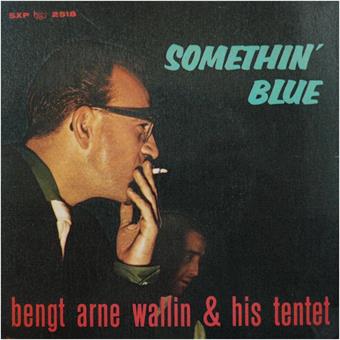
Swedish Trumpeter Bengt-Arne Wallin Dies at 89

I just heard from my Stockholm-based friend, Guy Jones, founder and president of Friends of Jan Lundgren, the fan club of pianist Jan Lundgren, that legendary Swedish trumpeter Bengt-Arne Wallin passed away on November 23. He was 89 years old, and even though he's far from a household name in the United States, he devoted his whole life to music and was extremely well respected in Scandinavian jazz circles. Born in Linköping, Wallin showed an interest in music at an early age and concentrated on the trumpet and the flugelhorn. He spent much of the 1950s and '60s playing and recording alongside such European jazz luminaries as Arne Domnérus and Lars Gullin, and when American tenor saxophonist Benny Golson made some recordings with Scandinavian jazzmen, Wallin was one of the musicians who were called in for the sessions.


Like pianist Jan Johansson, Wallin became interested in exploring the relationship between Swedish folk music and jazz, and his recordings in this vein garnered him much acclaim in his homeland. Besides his work as a trumpeter, Wallin was also valued as an arranger and composer (he wrote music for films and TV productions), and he also spent two decades as a music teacher at Stockholm's Musikhögskolan. Throughout his long and successful career, Wallin acted as mentor to younger musicians such as trombonist Nils Landgren, who, upon hearing of Wallin's passing, called him "my greatest mentor, both as a musician and as a human being." Pianist Jan Lundgren also remembered Wallin on his Facebook page, reflecting on how thankful he was to have had the chance to work with the great trumpeter, whom he considers "one of the finest arrangers we have had." I must admit that the only recordings I've ever heard by Wallin are the ones he made in 1959 and 1960 as part of an octet led by saxophonist Lars Gullin, which can be found in the Gullin 4-CD set, Portrait of the Legendary Baritone Saxophonist: The Complete Recordings 1956-1960 (Fresh Sound Records). On these, of course, Gullin is the star and the spotlight is mostly on him, but Wallin comes across as a very dependable accompanist in ensemble passages, and on "Blue Mail" and "Baritonome," for example, he even gets to contribute some highly original, exciting solos that make you wish he'd been featured a little more prominently. On the strength of these sides alone, there's little doubt that Wallin is a musician whose recorded legacy is worth exploring further.