A companion site to 'The Vintage Bandstand,' this is a series of brief posts about all kinds of good jazz, written and published by Anton Garcia-Fernandez in Martin, Tennessee, U.S.A.
As noted in earlier posts in Jazz Flashes, my Stockholm-based confrère Guy Jones, founder of the reissue label Fog Arts Records, has had the chance to interview Jim Tomlinson on three separate occasions that the British saxophonist/flutist visited the Swedish capital along with his wife, American vocalist Stacey Kent. You will find the first part of their conversation here. Back in 2018, a mere five months after their first meeting, Guy recorded a follow-up to their conversation, pretty much picking up where they'd previously left off. The second part of their chat was recorded at Stockholm's Humlegården and is a perfect companion to the first, since the two of them cover some different ground, but it was not to be the last. Being a frequent visitor to Scandinavia, Tomlinson met up with Guy for a third time at the same spot a year later, in October 2019, and on that occasion the discussion centered around British jazz greats such as Dudley Moore, Tubby Hayes, Johnny Dankworth, and Cleo Laine, among many others. All three podcasts, which may be found on the Fog Arts YouTube channel, should be of interest to serious jazz enthusiasts. The second part is available at the end of this post for your listening pleasure, while the third installment may be accessed here. JIM TOMLINSON IN CONVERSATION WITH GUY JONES, Part II
I've recently heard that my good friend Guy Jones, founder of the Stockholm-based jazz reissue label Fog Arts and occasional guest on the Jazz Flashes Podcast, has had the chance to interview the great British saxophonist and flutist Jim Tomlinson. The interview took place back in May 2018 in the lobby of the Scandic Grand hotel in the Swedish capital, which Tomlinson visited with his wife, American singer Stacey Kent, to play a few dates and give a talk on the collaboration between the two of them and Nobel laureate Kazuo Ishiguro.
Fog Arts founder and manager Guy Jones
Tomlinson is a versatile and engaging player who began his performing and recording career in the 1980s and who is well known via his albums as a leader, as well as his frequent collaborations with Kent on her critically acclaimed records. This 88-minute conversation offers a great deal of insight into the British reedman's art, covering all sorts of topics related to Tomlinson's life and illustrious musical career. The first part of the interview has been made available as a podcast on SoundCloud and on the Fog Arts YouTube channel, and readers of Jazz Flashes may access it at the end of this post. A second part of the conversation is forthcoming, and we're eagerly awaiting it.
Last month, the newly formed Fog Arts label began what is an ongoing series of digital reissues of Jan Lundgren albums that have been long out of print due to the demise of the record label for which they were originally cut. The first two are songbook packages that concentrate on the work of Victor Young and Jule Styne, two great composers who aren't usually the subject of such full-length projects by jazz musicians. A third album of Duke Ellington and Billy Strayhorn tunes is slated for release next month, and it's our intention to devote one Jazz Flash to each of these and other forthcoming Lundgren reissues, beginning with The Jan Lundgren Trio Plays the Music of Victor Young. By the time the Lundgren-led trio (with Mattias Svensson on bass and Rasmus Kihlberg on drums) entered the studio in Copenhagen in 2000 and 2001 to record this tribute to Young, one of the most celebrated film composers of all time, the Swedish pianist was well established, with a series of fine albums (Swedish Standards, Cooking! At the Jazz Bakery, Something to Live For) and collaborations with legendary jazzmen such as Herb Geller, Bill Perkins, Conte Candoli, and Arne Domnérus, to cite just a few. Lundgren had traveled to the U.S. to perform and had recorded twice in NYC. After cutting a whole CD of Ellington originals for the now-defunct Sittel label, he began to concentrate on the work of Great American Songbook songwriters who don't usually receive as much attention as the Gershwins, Porters, Mercers, etc., and thus this album was born. The idea was, it seems, to focus on both Young's well-known songs and some more obscure items from his prolific output. As it happened, it didn't prove to be an easy task, as Lundgren himself has noted: "I couldn't unearth any modern sheet music songbooks for either composer [he refers to Styne as well], and Young was particularly neglected. I found that curious—and a little bit shocking . . . Yet I also found it appealing, because I wanted to play songs by writers who hadn't been done to death by everyone else."
Swedish pianist Jan Lundgren
Lundgren was fortunate to be able to enlist the help of three excellent American artists—singers Stacey Kent and Deborah Brown, who handle the vocals on several of the tracks, and, particularly, the outstanding tenor saxophonist Johnny Griffin. They were all apparently touring European cities at the time and joined Lundgren's trio in Denmark on some of these sessions, to which they contributed in a major way. New Jersey-born Kent bookends the album with pensive readings of the classic ballads "Ghost of a Chance" and "My Foolish Heart," and she's also featured on a bouncy "Street of Dreams." Brown, who's from Kansas City, approaches the beautiful "A Hundred Years from Today" in a delicate manner, very much in tune with Lundgren's piano on that track, and then hastens the tempo on "Beautiful Love" and a scat-filled "Stella by Starlight." Griffin, one of the greatest tenorists in jazz history, shows off his mastery on two very different selections: the uptempo "A Weaver of Dreams," possibly inspired by the John Coltrane version, and the heartfelt ballad "When I Fall in Love," which taps into Griffin's most intimate persona. The latter is one of the highlights from the album, prompting these telling words from Lundgren: "When we'd finished the take, I noticed a tear in the corner of [Griffin's] eye. 'I was thinking of Ben,' Johnny quietly told me, referring of course to the great Ben Webster. It was a very emotional moment." And it is, indeed, a rendition that would have made the Brute proud!
Johnny Griffin
The trio is featured on the other five songs, which again range from Young classics to lesser-known compositions. Lundgren's piano shines on the uptempo "Sweet Sue (Just You)," one of Young's most enduring offerings, and "Love Letters" is given a Latin treatment that proves to be a good vehicle for Svensson's bass. "Song of Delilah" may sound like an odd choice at first, but its hip R&B arrangement actually turns it into one of the most memorable moments on the album. Very few probably remember the Ray Milland movie for which Young wrote "Golden Earrings," but the tune is lovely, and Lundgren treats it gently and with quite a bit of easy-going swing. Finally, "Alone at Last" is another of those obscurities that Lundgren is so adept at digging up, a film ballad that lends itself perfectly to the trio's relaxed approach. Overall, this is undoubtedly one of the best entries in Lundgren's ever-growing discography, and true jazz fans should be thankful to Fog Arts for making its content available again as digital downloads and on all major streaming platforms. We look forward to seeing the rest of these long-deleted albums back in circulation after so many years.
My friend Guy Jones, of Stockholm, Sweden, recently alerted me to the passing of Irish jazz guitar legend Louis Stewart, who died on August 20. He was 72, and though not as well known in the U.S. as in Europe, he was well respected on both sides of the Atlantic by people in the know. Throughout his long career, he recorded with jazz greats such as Tubby Hayes, George Shearing, Joe Williams, Peter Ind, and J.J. Johnson, to name but a few. Stewart spent a big chunk of his life and career in his homeland, which perhaps may help explain why he wasn't better known stateside. From the few recordings I've heard by Stewart, it becomes immediately clear that he displayed a very exciting style, characterized by his dazzling speed and his flawless technique. He recorded quite extensively as a leader, starting in the mid-1970s, and in 1998, more than two decades after releasing his first album, he was recognized by Dublin's Trinity College with an honorary doctorate in music, a well-deserved accolade for a man who devoted his whole life to jazz.
Stewart was born in Waterford, in the Irish province of Munster, in January 1944, but John Chilton, in his book Who's Who of British Jazz, tells us that he was actually raised in Dublin. Stewart started on piano and concentrated on guitar in his teens, playing with several outfits and even touring the U.S. with reedman Jim Doherty in 1961. He relocated to London in 1968, which is when he started to work extensively with saxophonist Tubby Hayes. His versatility soon made him a much sought-after sideman, and in the 1970s he spent time playing with renowned jazzmen like Benny Goodman, Peter Ind, and George Shearing, as well as becoming a member of Harry South's big band and accompanying Blossom Dearie on a tour of Australia. In the '80s Stewart worked with Stephane Grappelli and also led his own groups off and on until very recently, appearing all over Europe, often unaccompanied. His debut album, 1975's Louis the First, is a good example of Stewart in his prime and features him in trio, duo, and solo settings, tackling standards such as "All the Things You Are," "Body and Soul," "Autumn Leaves," and "Here's That Rainy Day." Though not many of his records are easy to find in the U.S., his trio sides for MPS with Shearing and Norwegian bassist Niels-Henning Ørsted Pedersen are available in the box set The MPS Trio Sessions, and his guitar duets with Martin Taylor are also highly regarded by critics. Any of these three options constitute good introductions to the very attractive sound of a guitarist who deserves wider recognition this side of the pond.
On June 28 my daughter turned three years old, and on that same day legendary Danish jazz violinist Svend Asmussen celebrated 100 years on earth, a whole century devoted to his first love—jazz, particularly of the swing variety. Though not very well known in the U.S., Asmussen, who was born in Copenhagen into a wealthy family in 1916, is one of a handful of stellar jazz violinists, a group that also includes Joe Venuti, Stuff Smith, and Stephane Grappelli (incidentally, Asmussen recorded with the latter two). Perhaps one of the reasons why Asmussen is largely overlooked this side of the pond is that he didn't appear in the States too often, but even so, he did earn the respect and admiration of jazz greats like Duke Ellington, John Lewis, and Benny Goodman, with all of whom he worked at some point in his long career. Asmussen showed an interest in music as a kid, and Venuti was actually an early influence on the violin. Yet a career in show business wasn't what his affluent parents had planned for him; however, the lure of the stage was too strong, and Asmussen decided to quit the dentistry degree he'd half-heartedly begun in order to concentrate on playing jazz professionally. He made his first recordings in the 1930s, and in the sixty years that followed, he never looked back, recording regularly and steadily until health problems related to his advanced age forced him into retirement early in the new century.
To commemorate his 100th anniversary, Storyville Records has just released a 5-CD box set entitled The Incomparable Fiddler Svend Asmussen: 100 Years, which offers a panoramic view of his astounding career, from his earliest sides of the '30s, '40s, and '50s to recordings he made in 1996 in a quartet setting. The set showcases Asmussen's dazzling virtuosity on the violin, his unique sense of swing, and his elegant delivery, and finds him in the company of talented confrères like Ulrik Neumann, Svend Hauberg, Georges Arvanitas, and of course, Stuff and Stephane. The 1964-65 sessions with Grappelli are among the many highlights of the box, and four rare recordings with Smith from 1966 show the two of them jamming together and really having a blast. Also included is a DVD that features a 1986 live date at Copenhagen's Jazzhus Montmartre with Kenny Drew on piano, Niels-Henning Ørsted Pedersen on bass, and Ed Thigpen on drums, which offers us a chance to see Asmussen in action. This new box set is definitely the perfect place to get an introduction to the incomparable legacy of Svend Asmussen, a man whose passion—and business, as the title of one of his classic sides states—is rhythm. Thanks for all the great music and happy century, Mr. Asmussen!
Born in Karlskrona, Sweden, in 1980, pianist Mattias Nilsson turned down the offer of a place at Malmö Academy of Music, to his parents' dismay, in order to follow a career as a professional jazz musician. In a recent interview with the website Friends of Jan Lundgren, Nilsson briefly explains his reasons: "My argument was that things were already looking as though they might work out, and I didn't want to halt my progress by taking four years off to study. I think it was Branford Marsalis who said 'If you've got something to fall back on, you probably will.'" This career-defining decision took place over a decade ago, and all these years later, time has proven Nilsson right: he's one of a select group of full-time jazz musicians in Scandinavia who don't need a second occupation to support themselves, has received several of Sweden's most prestigious awards and scholarships, and has done his fair share of touring throughout Europe and even as far afield as South America. What's more, Nilsson just released his first album as a leader—Dreams of Belonging. Cut precisely in Malmö over the course of two sessions on January 8 and 9, 2016, this is a solo effort partly inscribed within the long-standing Nordic tradition of blending jazz and folk music that goes back to the great Jan Johansson in the 1960s.
In fact, the opening track, "Folk Melody from Västmanland" (incidentally, the Swedish national anthem, also known as "Du Gamla, Du Fria"), is a beautiful traditional tune played with delicacy by Nilsson, who approaches "Serenade" and the title track, "Dreams of Belonging" in the same wistful, introspective sort of way. The latter is one of the three Nilsson originals on the album; the other two are "Hymn to Love" and "Spirea," two very personal pieces taken at a slow pace that are good examples of Nilsson's talent as a composer of semi-classical jazz. "At Frösö Church" is an equally relaxed take on "Vid Frösö Kyrka," a melody by the noted Swedish composer Wilhelm Peterson-Berger, and "Södermalm" comes from the pen of another important 20th-century composer, Thore Swanerud. Nilsson looks back even further on the album closer, "Day by Day," an old hymn originally titled "Blott en Dag" and written by the revered 19th-century songwriter Oscar Ahnfelt. Though the influence of Johansson and his epoch-making LP Jazz på Svenska is undeniable, in his interview with the Jan Lundgren fan club website, Nilsson says that he's tried to put his own personal stamp on the music: "The album centers around the kind of traditional Swedish music I've always been drawn to, and although I use plenty of jazz techniques, I hope I've been able to find my own 'voice' in the material." This he definitely does achieve on his version of John Hartford's country tune "Gentle on My Mind" (a major hit for both Glen Campbell and Dean Martin in the '60s, but hardly a common choice for jazz recordings), possibly the most light-hearted track on the album, and generally throughout the whole CD. Overall, this is a very satisfying solo piano effort that is well worth playing more than once, since it gets better and better with each listen.
Along with Humphrey Lyttelton, Ken Colyer, Kenny Ball, and Acker Bilk, among others, trombonist Chris Barber is one of the elder statesmen of British trad jazz, which was all the rage in the United Kingdom throughout the 1950s and would spawn and help popularize other styles such as skiffle and the British beat of the 1960s. Yet though his music is undeniably inspired by the classic New Orleans tradition, Barber has always had the ability to change with the times, which explains why he's managed to build up a following and stay current for such a long time. That may also go a long way toward explaining the international appeal of his band, which, as we can see from the title of the album we're presenting here, extended even beyond the old Iron Curtain. Barber was born in Hertfordshire in 1930, and after developing an interest in New Orleans jazz and the blues, he formed his first band while still a teenager. Barber had his biggest hits in the 1950s, among them the smash "Petite Fleur," with a memorable appearance from Monty Sunshine on clarinet. Scottish banjoist Lonnie Donegan played with Barber for several years, and his version of "Rock Island Line" hit the charts while he was still a member of Barber's outfit, thereby prompting the short-lived skiffle craze of the mid-'50s. The sound of Barber's band was always tight and exciting, and his affinity for the blues led to many gigs backing American bluesmen who were on tour in Britain. Barber even organized some of these tours, helping bring excellent blues artists such as Muddy Waters and Big Bill Broonzy to the British Isles and helping pave the way for R&B-inspired bands like the Yardbirds and the Rolling Stones.
The first time I ever heard Barber was on a two-volume vinyl album that my father had and that included a late-'60s live appearance by his band in East Berlin, and I was impressed by the irresistible sound of a band that seemed to be having a ball on stage that day at the Friedrichstadt Palast. Fortunately, that concert was reissued on CD by the Black Lion label in 1990 as Live in East Berlin, with excellent sound, and from the very beginning of the record we quickly realize that we're in for a treat. The band uses "I Never Shall Forget" as a vehicle for a German announcer to introduce each musician individually, after which they launch into an infectiously joyful reading of "Royal Garden Blues." Barber, of course, is on trombone, and the group includes fine trad musicians like trumpeter Pat Halcox, altoist / clarinetist John Crocker, guitarist John Slaughter, banjoist Stu Morrison, bassist Jackie Flavelle, and drummer Graham Burbridge. The repertoire includes New Orleans staples such as "Royal Garden Blues" and "Wild Cat Blues," some popular standards like "Lazy River" and "Makin' Whoopee," and even some sacred numbers such as "Over in Gloryland" and "God Can Do Anything." There are tips of the hat to Barney Bigard ("Saratoga Swing"), George Lewis ("St. Phillip Street Breakdown"), and early Johnny Hodges ("Sweet as Bear Meat"), and there's even time for Barber's own "Battersea Rain Dance." Barber uses Hoagy Carmichael's "Lazy River" to showcase his warm, blues-inflected trombone style, and Bigard's "Saratoga Swing," one of the many highlights of the concert, becomes a nine-minute tour de force with outstanding bluesy solos from Halcox and Slaughter. For over sixty years now, Chris Barber has been leading one of the best jazz outfits to come out of Britain, and this live recording in East Berlin catches the band in its prime in 1968 and is as good an introduction to Barber's sound as any compilation of his studio recordings.
German pianist Jutta Hippmet versatile saxophonist Zoot Sims sometime in the 1950s in Germany, precisely during a European tour of the Stan Kenton band, of which Sims was a member at the time. Born in Leipzig in 1925, Hipp had been playing in her native country and recording only occasionally since the end of WWII. That is, until she met Sims and critic Leonard Feather, who persuaded her to move to New York City. Upon her arrival stateside in 1955, she encountered harsh criticism from both jazz fans and critics who believed that her playing style was too close to that of Lennie Tristano and, particularly, that of Horace Silver. But by 1956, when she appeared at the Newport Jazz Festival and cut this impressive session with Sims at Rudy Van Gelder's New Jersey studio, she seems to have set out to prove her critics wrong.
Zoot and Jutta
Indeed, onJutta Hipp with Zoot Sims, released on Blue Note in 1956, Hipp stays away from the influence of Tristano and Silver, and her sound is full of swing on uptempo numbers ("Wee Dot,""Almost Like Being in Love,""Too Close for Comfort") and of restrained melancholy on "Violets for Your Furs," the only ballad of the session. The group is rounded out byJerry Lloydon trumpet,Ahmed Abdul-Malikon bass, andEd Thigpenon drums, and this quintet setting is perfect to showcase Hipp's delicate playing. Lloyd provides an original composition ("Down Home") and Sims another one ("Just Blues"), and even though Sims's tenor saxophone is accorded more space than Hipp's piano, it is Hipp that creates the wistful, easy-going atmosphere that makes this album a winner. The 2008 CD reissue adds two tracks from the session that never made it onto the original LP ("These Foolish Things"and"'S Wonderful"), thus offering everything that Hipp and Sims recorded together. Hipp, who was also a talented painter, would inexplicably retire from the New York jazz scene shortly after leading this session, and this very recommendable quintet album is definitely the highlight of her meager, though very interesting, discography. Anyone who enjoys her collaboration with Sims should definitely look up her live cuts At the Hickory House (Blue Note, two volumes), as well as the recordings she made in Germany before moving to the U.S., which can be found on Frankfurt Special (Fresh Sound) and Lost Tapes: The German Recordings 1952-1955 (Jazzhaus).
The first Jazz Flashes post of 2016 is devoted to a little-known collaboration between trumpeter Humphrey Lyttelton and saxophonist Buddy Tate, a session held in London in the 1970s. Happy New Year full of great jazz to everyone! Not only was British trumpeter Humphrey Lyttelton a fine musician, but he was also a tireless promoter of and advocate for good jazz in the British Isles, engaging in all sorts of activities, from making popular records like "Bad Penny Blues" to organizing jazz festivals to hosting radio and television shows. Steeped in New Orleans jazz and swing since he taught himself to play the trumpet, Lyttelton became one of the most prominent figures of the so-called trad jazz movement in Britain in the 1950s along with other big names such as Chris Barber and Ken Colyer. By the mid-1970s, when he cut this session with tenorist Buddy Tate, he'd been active in British jazz circles for well over 20 years and was highly respected. Born in Sherman, TX, in 1913, Tate came straight out of the Swing Era and soon became prominent through his work with the Count Basie Orchestra, where he replaced tenor saxophonist Herschel Evans. Throughout his career, Tate led a number of fantastic recording sessions, fronted a band for over 20 years at the Celebrity Club in Harlem, and was a frequent visitor to Europe. It was precisely during one of these visits, when he played the Montreux Jazz Festival in 1974, that this little-known session with Lyttelton and a host of fine British musicians took place.
The eight tracks that comprise Swinging Scorpio (Black Lion) were recorded at London's Pye Studios on July 3, 1974, and find Lyttelton (trumpet, clarinet) and Tate (tenor sax, clarinet) in the company of Bruce Turner (alto sax, clarinet), Kathleen Stobart (tenor and baritone saxes, clarinet), Mick Pyne (piano), Dave Green (bass), and Tony Mann (drums). This is the type of studio band that Lyttelton often put together for specific recording sessions, and all musicians involved have a thorough understanding of the swing idiom and are able accompanists to a giant like Tate. Legendary trumpeter Buck Clayton contributed all the original compositions and arrangements for the date, mostly because by the mid-1970s, he'd retired from playing and had concentrated on writing and arranging for medical reasons. In fact, Clayton wasn't able to attend the session due to health problems, but the charts he devised here are all the work of a master arranger with very clear ideas about how a small swing band should sound. The blues inflections we can hear on Clayton's own playing can be heard throughout this session, from "Kansas City Woman," with a lovely baritone sax solo from Stobart, to "Swinging Scorpio," which features a solid piano solo from Pyne. Clayton's ensemble writing is very exciting on uptempo numbers ("Outswinger," "Steevos," "Clarinet Lemonade") and his charts leave quite a bit of room for solos by Tate and Lyttelton. The only ballad that came out of this session, "The One for Me," shows that Clayton could also turn in sensitive slow tunes, and this one benefits from some highly restrained contributions from Lyttelton, Tate, and Pyne. All in all, this session is the work of a master saxophonist who was still in fine form in his sixties and is supported by a very sympathetic group of outstanding British musicians, and as such, it deserves to be heard.
When one considers Jamaica's contributions to world music, it's inevitable to think of reggae and ska, but jazz may not be the first thing that comes readily to mind. And yet in the 1940s and '50s, a group of Jamaican jazzmen that included trumpeter Dizzy Reece and altoist Joe Harriott moved to England and made their mark on British jazz. Among this group was tenorist Wilton Gaynair, nicknamed "Bogey," although he actually settled in Germany, where he didn't have much trouble finding a job within the ranks of the popular jazz-inflected orchestra led by Kurt Edelhagen. Born in Kingston in 1927, Gaynair learned to play the saxophone while at the famous Alpha Boys School and was soon a regular fixture at the local clubs before relocating to Europe in 1955 at Reece's behest. Producer Tony Hall, who supervised some of Gaynair's sessions, describes the saxophonist as "a very humble, modest man," which is perhaps one of the reasons why the groups he led always sound so relaxed and the interaction between the musicians appears to be seamless. Unfortunately, Gaynair only cut three albums as a leader, the first two (Blue Bogey and Africa Calling) for the British label Tempo in 1959 and 1960, and a third one (Alpharian) in Germany in 1982, some 22 years after his second outing for Tempo.
Although, after leaving Jamaica, Gaynair lived most of his life in Germany, the session that yielded Blue Bogey took place in London on August 26, 1959. Seven songs were cut under Hall's supervision in a quartet setting with Gaynair on tenor, Terry Shannon on piano, Kenny Napper on bass, and Bill Eyden on drums, filling in for the great Phil Seamen, who apparently wasn't able to make it to the session. Besides a fine reading of Clifford Brown's "Joy Spring" and the two standards ("The Way You Look Tonight" and "Gone with the Wind") that brought both the session and the album to a close and that are taken at a rather brisk pace, four originals by Gaynair were recorded, and they offer ample proof of his talent as a composer. The album opener, "Wilton's Mood," is based on a catchy riff that is stated both at the beginning and at the end, and "Blues for Tony," dedicated to the session's producer, is an engaging blues tune played with conviction by Gaynair, who is ably supported by the rest of the band. "Deborah" is a beautiful ballad written for Shannon's daughter, and here Gaynair's relaxed, lyrical approach shows his debt to both Coleman Hawkins and Johnny Hodges. "Rhythm" is a great example of the perfect understanding that exists between the four members of the quartet, since it was originally just a rehearsal that sounded so good that it was deemed a keeper! In fact, the whole album is a keeper, a wonderful, sadly neglected record that is best enjoyed when one dims the lights.
If ever anybody was more deserving of being described as a multi-instrumentalist, that musician was Harry Parry, the Welsh bandleader who mastered all sorts of instruments, from reeds to brass to drums to the violin, before settling for a career as a clarinetist leading several trio and sextet combos on highly popular BBC radio shows throughout the 1940s and '50s. Not only was Parry an accomplished musician, but his vast knowledge of the history of jazz made him a perfect host for the BBC's Jazz Club series as well. His rise to stardom was preceded by a period of apprenticeship within the ranks of several dance bands led by then-popular names such as Oscar Grasso, Charles Shadwell, and Louis Levy, among many others. Parry, who sang occasionally, also had a fine ear for talent, and some of the small swing groups that he fronted when popular acclaim beckoned included a young George Shearing on piano. Shearing was also featured on some of the trios and sextets that Parry put together for broadcasting purposes during the World War II years.
The war and postwar period of Parry's career is precisely what is captured on the 2004 Dutton Vocalion release, Parry Opus. The 26 tracks included on the CD were recorded between 1942 and 1946 are perfect examples of Parry in his prime, playing the clarinet and leading sextets that often feature Shearing on piano and Ben Edwards on drums. As a clarinetist, Parry was obviously influenced by Artie Shaw and Benny Goodman, so it's no wonder that he chose to record songs that were closely associated with Shaw and Goodman, such as "Frenesi," "Moonglow," "Runnin' Wild," "After You've Gone," and "Body and Soul." As these sides show, there is always a sort of restrained elegance to Parry's playing, and he leads his sextets with great conviction and charm. The collection also features some of his own compositions, including "Parry Opus" and "Potomac Jump," the latter written during a highly acclaimed engagement at London's Potomac restaurant. Both the contents and the fantastic sound make this release the perfect introduction to Parry's sound, which still comes across as fresh and exciting all these years later. Parry, who also dabbled in acting and television, passed away in London in 1956, due to a heart attack, when he was only 44 years old.
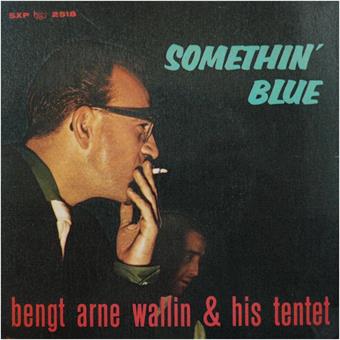
I just heard from my Stockholm-based friend, Guy Jones, founder and president of Friends of Jan Lundgren, the fan club of pianist Jan Lundgren, that legendary Swedish trumpeter Bengt-Arne Wallin passed away on November 23. He was 89 years old, and even though he's far from a household name in the United States, he devoted his whole life to music and was extremely well respected in Scandinavian jazz circles. Born in Linköping, Wallin showed an interest in music at an early age and concentrated on the trumpet and the flugelhorn. He spent much of the 1950s and '60s playing and recording alongside such European jazz luminaries as Arne Domnérus and Lars Gullin, and when American tenor saxophonist Benny Golson made some recordings with Scandinavian jazzmen, Wallin was one of the musicians who were called in for the sessions.
Like pianist Jan Johansson, Wallin became interested in exploring the relationship between Swedish folk music and jazz, and his recordings in this vein garnered him much acclaim in his homeland. Besides his work as a trumpeter, Wallin was also valued as an arranger and composer (he wrote music for films and TV productions), and he also spent two decades as a music teacher at Stockholm's Musikhögskolan. Throughout his long and successful career, Wallin acted as mentor to younger musicians such as trombonist Nils Landgren, who, upon hearing of Wallin's passing, called him "my greatest mentor, both as a musician and as a human being." Pianist Jan Lundgren also remembered Wallin on his Facebook page, reflecting on how thankful he was to have had the chance to work with the great trumpeter, whom he considers "one of the finest arrangers we have had." I must admit that the only recordings I've ever heard by Wallin are the ones he made in 1959 and 1960 as part of an octet led by saxophonist Lars Gullin, which can be found in the Gullin 4-CD set, Portrait of the Legendary Baritone Saxophonist: The Complete Recordings 1956-1960 (Fresh Sound Records). On these, of course, Gullin is the star and the spotlight is mostly on him, but Wallin comes across as a very dependable accompanist in ensemble passages, and on "Blue Mail" and "Baritonome," for example, he even gets to contribute some highly original, exciting solos that make you wish he'd been featured a little more prominently. On the strength of these sides alone, there's little doubt that Wallin is a musician whose recorded legacy is worth exploring further.