Showing posts with label Jan Lundgren. Show all posts

Tuesday, June 27, 2017

Two-Sentence Jazz Reviews, May-June 2017—Part II

Here's the second installment of the brief two-sentence reviews of jazz records that I heard during my recent European trip and that I originally published in my Facebook page.

The Modern Jazz Quartet at Music Inn, Vol. 2 (Atlantic, 1959)

Recorded live in Lenox, MA, in the summer of 1958, this date showcases the usual elegance of the forward-thinking Modern Jazz Quartet along with tenorist Sonny Rollins on two tracks (on Vol. 1, recorded two years earlier at the same place, it's Jimmy Giuffre that guests). The carefully chosen set list works perfectly, mixing standards with tunes by John Lewis, Milt Jackson, and Charlie Parker, and the two tracks with Rollins ("Bags' Groove" and "Night in Tunisia") are the highlights of an album that is superb all around.


Oscar Peterson Trio + One (Mercury, 1964 / Verve, 2007)

Cut for Mercury in 1964, this is one of Oscar Peterson's most relaxed, bluesiest dates of the 1960s, featuring a special guest in trumpeter Clark Terry, who plays both flugelhorn and trumpet. Peterson's piano playing is characteristically dazzling, as usual, and the comfortable interplay between his trio (Ray Brown on bass and Ed Thigpen on drums) and Terry is a joy to hear, making this an essential entry in Peterson's vast, rich discography.

Jan Lundgren Trio—Svenska Landskap (Sittel, 2003 / Fog Arts, 2017)

This 2003 gem now available for digital download and streaming finds Jan Lundgren and his trio (Mattias Svensson on bass and Morten Lund on drums) on a musical journey around Sweden via jazz versions of traditional tunes and a couple of very appropriate Lundgren originals. The playing is swift and fresh on the uptempo tracks and lyrical and introspective on the ballads, and the album as a whole won't disappoint anyone who takes a chance on it. [You may read a more detailed Jazz Flashes review about this album here.]

Freddie Hubbard—Born to Be Blue (Pablo, 1982)

This is a lovely, very recommendable late-career album by trumpeter Freddie Hubbard in a percussion-laden sextet that also features the great Harold Land on tenor sax and flute. It features some very engaging uptempo numbers (like "Joy Spring," for instance) and some typically sensitive, lyrical ballad playing such as the beautiful title track.


Friday, May 12, 2017

New (Re)Issues: Ella Fitzgerald, Johnny Mercer & Bobby Darin, Jan Lundgren

This year marks the centennial of Ella Fitzgerald's birthday, so it's the perfect time to celebrate her vast musical legacy and an amazing career that spanned several decades. While in this celebratory mood, Verve just released a 4-CD set entitled 100 Songs for a Centennial, which offers a good cross-section of recordings from two important periods of her career—her associations with Decca and Verve. The sides Fitzgerald cut for Decca in the 1940s and '50s, after the years she spent with Chick Webb in the '30s, cemented her reputation as a top-notch jazz and pop singer and gave her the chance to record with other great names like Louis Jordan or the Ink Spots. It was also while at Decca that she made her beautiful intimate recordings with pianist Ellis Larkins that can be found on the Pure Ella CD. Whereas at Decca she concentrated on singles, after signing with Norman Granz's Verve Records in the mid-'50s, Fitzgerald switched her primary interest to albums, and it was then that she began her acclaimed series of songbooks devoted to some of the greatest American composers, such as Cole Porter, the Gershwins, Irving Berlin, Johnny Mercer, Duke Ellington, and co. During this very successful period, she also had plenty of time to record thematic albums with top arrangers like Nelson Riddle and Frank DeVol, as well as cutting some classic live LPs. While 100 Songs for a Centennial doesn't span her whole career, it's still interesting because it features some of Fitzgerald's most enduring recordings, all collected in one place.


In 1960, a seemingly unlikely musical collaboration took place as rocker-turned-swinger Bobby Darin and ace singer-songwriter Johnny Mercer entered the Atlantic studios to make an album together, with arranger Billy May at the helm. The result, released as Two of a Kind, was indeed unique and showcased the mutual understanding between both artists, who were clearly having lots of fun going through some Mercer classics and a few lesser-known songs that hark back to the 1920s. I already wrote about this LP several years ago, here, but now the Omnivore label has reissued the original album along with a few unreleased outtakes that provide a glimpse into these incredibly charming, fun sessions, full of swing and camaraderie. The sound is fantastic, and this reissue is recommendable even for those who may already have the album on CD without the bonus tracks.


The Stockholm-based label Fog Arts continues with the digital reissue of albums by the pianist Jan Lundgren (and others) that have been out of print for a while. On May 5 they made available for download and for streaming on all major services a recording that Lundgren and his trio (Mattias Svensson on bass and Morten Lund on drums) cut for Sittel back in 2003. Originally released both as Svenska Landskap and Landscapes, it's yet another masterful melding of jazz and Scandinavian folk music in the mold of the highly successful Swedish Standards. The concept here is clear—a collection of mostly traditional tunes culled from the different geographic areas of Sweden and transformed by the trio's personal jazzy sensibility and Lundgren's flair for melodies that are sometimes swift and lilting and sometimes pensive and introspective. The arrangements are at once respectful with tradition, imaginative, and sensitive, and besides a couple of Lundgren originals ("Småland" and "Blekinge") that blend in perfectly with the overall mood of the album, there's also one selection by the iconic 18th-century Swedish poet and composer Carl Michael Bellman and another by the highly respected Scandinavian artist Evert Taube. Anyone looking for truly beautiful jazz that incorporates both tradition and modernity need look no further. More information about Svenska Landskap here, and of course, further interesting Fog Arts digital reissues are slated to appear in the near future, including more recordings by Lundgren, as well as a collaboration between Czech pianist Emil Viklicky and New York trumpeter Marcus Printup.


Saturday, November 19, 2016

A Conversation with Guy Jones about Jan Lundgren's New Digital Reissues

Jan Lundgren
The Stockholm-based Fog Arts label has recently reissued three long-deleted albums by Swedish jazz pianist Jan Lundgren as digital downloads. I've already reviewed one of them in Jazz Flashes not too long ago, Jan Lundgren Trio Plays the Music of Victor Young. The other two are JLT Plays the Music of Jule Style and Something to Live For, the latter a Duke Ellington and Billy Strayhorn songbook. All three albums are available for download and streaming on all major internet platforms, and the Fog Arts people have further titles by Lundgren slated for digital reissue in the near future. For one of the episodes of the Jazz Flashes Podcast, which is available on YouTube and Podbean, I spoke with my good friend Guy Jones, the director of the Friends of Jan Lundgren fan club and General Manager of the newly formed Fog Arts label. You may listen to the whole conversation here:


Guy Jones
Throughout the podcast, Guy reminisces about how he became interested in Lundgren's music, how he started the Lundgren fan club, and how this new music venture came about. We also talk at length about the three Lundgren albums that are now available again after so many years thanks to the efforts of Fog Arts. All three CDs are highly recommendable and feature excellent guests such as singers Mark Murphy, Stacey Kent, and Deborah Brown, and legendary tenorman Johnny Griffin. I hope you enjoy the interview, and if so, please stay tuned for similar podcasts in the future!


Friday, October 21, 2016

New Reissues: Jan Lundgren Trio Plays the Music of Victor Young

Last month, the newly formed Fog Arts label began what is an ongoing series of digital reissues of Jan Lundgren albums that have been long out of print due to the demise of the record label for which they were originally cut. The first two are songbook packages that concentrate on the work of Victor Young and Jule Styne, two great composers who aren't usually the subject of such full-length projects by jazz musicians. A third album of Duke Ellington and Billy Strayhorn tunes is slated for release next month, and it's our intention to devote one Jazz Flash to each of these and other forthcoming Lundgren reissues, beginning with The Jan Lundgren Trio Plays the Music of Victor Young. By the time the Lundgren-led trio (with Mattias Svensson on bass and Rasmus Kihlberg on drums) entered the studio in Copenhagen in 2000 and 2001 to record this tribute to Young, one of the most celebrated film composers of all time, the Swedish pianist was well established, with a series of fine albums (Swedish Standards, Cooking! At the Jazz Bakery, Something to Live For) and collaborations with legendary jazzmen such as Herb Geller, Bill Perkins, Conte Candoli, and Arne Domnérus, to cite just a few. Lundgren had traveled to the U.S. to perform and had recorded twice in NYC. After cutting a whole CD of Ellington originals for the now-defunct Sittel label, he began to concentrate on the work of Great American Songbook songwriters who don't usually receive as much attention as the Gershwins, Porters, Mercers, etc., and thus this album was born. The idea was, it seems, to focus on both Young's well-known songs and some more obscure items from his prolific output. As it happened, it didn't prove to be an easy task, as Lundgren himself has noted: "I couldn't unearth any modern sheet music songbooks for either composer [he refers to Styne as well], and Young was particularly neglected. I found that curious—and a little bit shocking . . . Yet I also found it appealing, because I wanted to play songs by writers who hadn't been done to death by everyone else."


Swedish pianist Jan Lundgren
Lundgren was fortunate to be able to enlist the help of three excellent American artists—singers Stacey Kent and Deborah Brown, who handle the vocals on several of the tracks, and, particularly, the outstanding tenor saxophonist Johnny Griffin. They were all apparently touring European cities at the time and joined Lundgren's trio in Denmark on some of these sessions, to which they contributed in a major way. New Jersey-born Kent bookends the album with pensive readings of the classic ballads "Ghost of a Chance" and "My Foolish Heart," and she's also featured on a bouncy "Street of Dreams." Brown, who's from Kansas City, approaches the beautiful "A Hundred Years from Today" in a delicate manner, very much in tune with Lundgren's piano on that track, and then hastens the tempo on "Beautiful Love" and a scat-filled "Stella by Starlight." Griffin, one of the greatest tenorists in jazz history, shows off his mastery on two very different selections: the uptempo "A Weaver of Dreams," possibly inspired by the John Coltrane version, and the heartfelt ballad "When I Fall in Love," which taps into Griffin's most intimate persona. The latter is one of the highlights from the album, prompting these telling words from Lundgren: "When we'd finished the take, I noticed a tear in the corner of [Griffin's] eye. 'I was thinking of Ben,' Johnny quietly told me, referring of course to the great Ben Webster. It was a very emotional moment." And it is, indeed, a rendition that would have made the Brute proud!


Johnny Griffin
The trio is featured on the other five songs, which again range from Young classics to lesser-known compositions. Lundgren's piano shines on the uptempo "Sweet Sue (Just You)," one of Young's most enduring offerings, and "Love Letters" is given a Latin treatment that proves to be a good vehicle for Svensson's bass. "Song of Delilah" may sound like an odd choice at first, but its hip R&B arrangement actually turns it into one of the most memorable moments on the album. Very few probably remember the Ray Milland movie for which Young wrote "Golden Earrings," but the tune is lovely, and Lundgren treats it gently and with quite a bit of easy-going swing. Finally, "Alone at Last" is another of those obscurities that Lundgren is so adept at digging up, a film ballad that lends itself perfectly to the trio's relaxed approach. Overall, this is undoubtedly one of the best entries in Lundgren's ever-growing discography, and true jazz fans should be thankful to Fog Arts for making its content available again as digital downloads and on all major streaming platforms. We look forward to seeing the rest of these long-deleted albums back in circulation after so many years.


Tuesday, May 10, 2016

Coleman Hawkins Quartet: Today and Now, 1962

In his fan-club website, Swedish pianist Jan Lundgren recently reviewed one of Coleman Hawkins's late-career albums, the often underappreciated Today and Now (go here, then check out the 26 April 2016 entry). Says Lundgren, "It's a classic jazz recording which must surely rank as one of the best-sounding albums ever made. Today and Now is perhaps not the most obvious choice for many of Hawkins' fans, but it's definitely one of my all-time favorites. Everything on this disc sounds wonderfully good, and I wonder if I've ever heard a better sax sound on record. . . The music is generally on the soft side, which makes it the ideal record to sit back and relax to." Lundgren is definitely right on all counts: the sound of this album is crisp and clear, the song choices favor a slower, more relaxing mood over uptempo swingers, and yet, the record remains one of the least discussed and remembered in Hawkins's discography. By the time he cut these seven tracks at the Rudy Van Gelder studio in 1962, the Hawk had long been regarded as a jazz legend, one of the leaders of the stylistic transition from swing to bop, and was revered by anyone who ever picked up a saxophone. He was also pushing sixty, had developed a drinking problem, and the quality of his recorded output had become rather erratic. No matter, though—when he was in good form, Hawkins could still make the magic happen, particularly in a small-group setting. And on these two sessions, the Hawk sounds relaxed, engaged, and in complete command of the instrument.

Today and Now is one of Hawkins's three albums for Impulse (the other two are Desafinado and Wrapped Tight) and it was recorded over the course of two sessions in Englewood Cliffs, NJ, on September 9 and 11, 1962. These two dates find Hawkins on tenor saxophone in the company of Tommy Flanagan on piano, Major Holley on bass, and Eddie Locke on drums. It's an excellent quartet, but from the beginning it becomes clear that Hawkins is the main attraction. The repertoire is rather unusual, with a few swinging tracks thrown in among the ballads. The opener, the traditional tune "Go Lil' Liza," is a good excuse for Hawkins to improvise on the agreeable melody, with a couple of solos from Holley (played arco) and Flanagan, who is always classy and engaging. "Swingin' Scotch" is basically a series of variations on the Scottish air "Loch Lomond," and the old evergreen "Don't Sit Under the Apple Tree" is taken at a pleasing light tempo by the quartet. In the Hawk's hands, the old-timer "Put On Your Old Grey Bonnet" becomes a soulful, bluesy affair, and the three remaining tracks (the ballads "Quintessence," "Don't Love Me," and "Love Song from Apache") are definitely the highlights of the album, even if "Apache" may seem like an unlikely choice at first. On all three, but particularly on Quincy Jones's "Quintessence" and the little-known "Don't Love Me," Hawkins sounds relaxed and introspective, with a breathiness of tone that is perfectly suited to the tunes. As on the rest of the album, the accompaniment by Flanagan, Holley, and Locke is superb. As Lundgren rightly points out, this album is a good choice for relaxation, and its overall high quality, I would add, makes it deserving of more praise and critical attention.


Saturday, December 19, 2015

Harry Allen and Jan Lundgren Play Johnny Mandel

I just learned that Britain's prestigious Jazz Journal has named two albums by Swedish pianist Jan Lundgren among the top-ten best jazz records in its yearly Critics' Poll. One of these (coming in at number 3) is the compilation Jan Lundgren: A Retrospective, which includes some of the best sides Lundgren has cut since the beginning of his career in the mid-1990s for the Barcelona-based Fresh Sound label. You can read a review of that CD here. The other, which made it to number 6 in the poll, is a collaboration between Lundgren and tenorist Harry Allen, entitled Quietly There (Stunt Records). Recorded in Copenhagen over the course of two consecutive sessions on July 11 and 12, 2014, the album finds Allen and Lundgren in the company of bassist Hans Backenroth and drummer Kristian Leth, going through nine lovely Johnny Mandel compositions, some of which ("Emily," "A Time for Love," and "The Shadow of Your Smile," for instance) are better known than others.


The Harry Allen / Jan Lundgren Quartet
The pairing of Allen and Lundgren is extremely satisfying, and aided by such a dependable rhythm section, both men enjoy plenty of room to solo, both on mid-tempo and uptempo numbers such as "Sure as You Are Born" (a phenomenal album opener), "Cinnamon and Clove," and "Suicide Is Painless" (which is actually the theme from M.A.S.H.) as well as on slower tunes. The breathy quality of Allen's style, often vaguely reminiscent of Ben Webster, comes to the fore particularly on ballads like "Emily" and "The Shining Sea." Both musicians take the title track, "Quietly There," at an easy-swinging pace, which is already evident in Lundgren's attractive piano introduction, followed by some elegant blowing by Allen. Lundgren finds new ways to approach the popular ballad "The Shadow of Your Smile" and surprises the listener by choosing to begin with the verse. The piano-saxophone duo that kicks off that track is one of the most beautiful moments in the album, and when Backenroth and Leth come in about a third into the tune, the slightly Latin flavor they lend the melody sounds very appealing. "Just a Child" finds Lundgren at his most delicate and introverted, as though he were playing just for himself, and Allen seems to be inspired by Lundgren's introduction to put an even greater emphasis on the breathiness of his playing. Of course, congratulations are in order for Lundgren and Allen, not just for the deserved accolades their work has earned from Jazz Journal, but also because this collaboration is one of the very best entries in the already large discographies of both men.


Wednesday, November 25, 2015

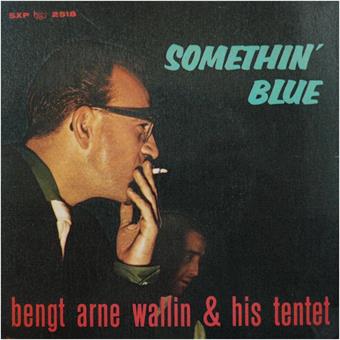
Swedish Trumpeter Bengt-Arne Wallin Dies at 89

I just heard from my Stockholm-based friend, Guy Jones, founder and president of Friends of Jan Lundgren, the fan club of pianist Jan Lundgren, that legendary Swedish trumpeter Bengt-Arne Wallin passed away on November 23. He was 89 years old, and even though he's far from a household name in the United States, he devoted his whole life to music and was extremely well respected in Scandinavian jazz circles. Born in Linköping, Wallin showed an interest in music at an early age and concentrated on the trumpet and the flugelhorn. He spent much of the 1950s and '60s playing and recording alongside such European jazz luminaries as Arne Domnérus and Lars Gullin, and when American tenor saxophonist Benny Golson made some recordings with Scandinavian jazzmen, Wallin was one of the musicians who were called in for the sessions.


Like pianist Jan Johansson, Wallin became interested in exploring the relationship between Swedish folk music and jazz, and his recordings in this vein garnered him much acclaim in his homeland. Besides his work as a trumpeter, Wallin was also valued as an arranger and composer (he wrote music for films and TV productions), and he also spent two decades as a music teacher at Stockholm's Musikhögskolan. Throughout his long and successful career, Wallin acted as mentor to younger musicians such as trombonist Nils Landgren, who, upon hearing of Wallin's passing, called him "my greatest mentor, both as a musician and as a human being." Pianist Jan Lundgren also remembered Wallin on his Facebook page, reflecting on how thankful he was to have had the chance to work with the great trumpeter, whom he considers "one of the finest arrangers we have had." I must admit that the only recordings I've ever heard by Wallin are the ones he made in 1959 and 1960 as part of an octet led by saxophonist Lars Gullin, which can be found in the Gullin 4-CD set, Portrait of the Legendary Baritone Saxophonist: The Complete Recordings 1956-1960 (Fresh Sound Records). On these, of course, Gullin is the star and the spotlight is mostly on him, but Wallin comes across as a very dependable accompanist in ensemble passages, and on "Blue Mail" and "Baritonome," for example, he even gets to contribute some highly original, exciting solos that make you wish he'd been featured a little more prominently. On the strength of these sides alone, there's little doubt that Wallin is a musician whose recorded legacy is worth exploring further.