A companion site to 'The Vintage Bandstand,' this is a series of brief posts about all kinds of good jazz, written and published by Anton Garcia-Fernandez in Martin, Tennessee, U.S.A.
This new year of 2017 has begun on several sour notes, with the departures of Nat Hentoff and Buddy Bregman a few days ago, to which we must add now that of vocalist and pianist Buddy Greco, one of the last of the vanishing breed of saloon singers. He passed away on January 10 at 90 years old. Unfortunately, whenever Greco is cited these days, it's mostly because of his rocky personal life: his many failed marriages, his eccentricities, his dealings with the Rat Pack, and his quick temper. But if we concentrate on his musical career, we find that Greco was a solid jazz pianist and a sophisticated singer who has left behind a very valuable body of work. Born in Philadelphia in 1926, Greco was extremely precocious, and his interest in music was encouraged by his father, who owned a record store. In the early 1940s Greco spent four years singing, playing piano, and writing arrangements for Benny Goodman. He left the orchestra and struck out on his own in 1946, around the time when solo singers had started eclipsing the big bands, and he was quite successful at it, even scoring a few hits, one of the most memorable of which was his fun uptempo version of "The Lady Is a Tramp." The success of his very entertaining live concerts and classy recordings quickly led to television and film appearances, as well as to opportunities to sing and pal around with Frank Sinatra, Dean Martin, and Sammy Davis, Jr., in Las Vegas. However, he never attained the heights of popularity of his more famous confreres.
Despite the many ups and downs he went through in his career, Greco always concentrated on doing what he did best: singing and playing piano. In an interview with the New York Times in the 1960s, he explained: "I'd always wanted to be a jazz pianist. But it's easier to make a living as a singer. . . . By singing I can appeal to the masses." And so he did, almost right up until his very last days, appearing all over the world as a featured attraction and also as part of tribute shows to Benny Goodman and Peggy Lee. His recorded oeuvre is prodigiously vast, rich, and varied, ranging stylistically from jazz to pop to country, even to Italian songs, and his discography is full of excellent albums such as Live at Mr. Kelly's, My Buddy, and On Stage. But, in my opinion, his best project is arguably Songs for Swinging Losers, a 1960 concept album modeled on Sinatra's Songs for Swingin' Lovers that captures Greco at his peak as a saloon singer. The arrangements by Chuck Sagle are always tasteful, and Greco indulges his penchant for drama, more restrained than usual on this occasion, performing a repertoire of classic tunes that includes "Something I Dreamed Last Night," "I'm Lost," "These Foolish Things," "That Old Feeling," "You Don't Know What Love Is," and "I Got It Bad and That Ain't Good," as well as an opener written specifically for the album by Sagle and entitled "A Swinging Loser." This recording is quintessential Greco, and the perfect introduction to the sound of a singer like no other whose work is well worth delving into. R.I.P. Buddy Greco.
I just heard from my friend Malcolm Macfarlane, of Cheshire, England, that the great arranger Buddy Bregman has passed away in his Los Angeles home at age 86. Born in Chicago in 1930, Bregman came into prominence in the 1950s and '60s, arranging classic albums for the likes of Bing Crosby, Ella Fitzgerald, Rosemary Clooney, Sammy Davis, Jr., and Anita O'Day, to name but a few. He also wrote scores for movies such as The Pajama Game, worked on television as the musical director of The Eddie Fisher Show, and in the '60s became much in demand in England as a producer for the BBC and ITV. Songwriting royalty ran in Bregman's family, since the famed songwriter Jule Styne was his uncle, and it didn't take too long for the young Bregman to develop a fascination with jazz and and interest in writing arrangements. His first big break came in the mid-'50s in the form of an offer from none other than Norman Granz to work for his then-new Verve label, where one of his first projects was the highly successful Ella Sings the Cole Porter Songbook with Fitzgerald, who apparently was at first a little wary of Bregman's youth. He was then in his mid-twenties and was beginning to be known for powerful, brassy arrangements that sounded quite modern, something that is evident in the charts he wrote for Crosby's Bing Sings Whilst Bregman Swings, in my opinion one of the best albums in Der Bingle's vast discography.
Bing Crosby and Buddy Bregman, 1956
While at Verve, Bregman also had the opportunity to showcase his high-octane style on excellent big band albums that were released under his own name. Possibly the best of these is 1956's Swinging Kicks, which features an incredible cast of stellar musicians like Bud Shank, Jimmy Giuffre, Ben Webster, Georgie Auld, Stan Getz, Conte and Pete Candoli, Andre Previn, Frank Rosolino, Alvin Stoller, and Stan Levey, among others—truly the cream of the crop of '50s West Coast jazz. Other albums with Bregman as a leader (Dig Buddy Bregman in Hi-Fi, Swingin' Standards) show a consistently high quality, and in arranging the Count Basie-Joe Williams classic The Greatest!!! Count Basie Plays, Joe Williams Sings Standards, Bregman proves that he has a deep understanding of Basie's hard-swinging style. From the '60s on, Bregman concentrated most of his efforts on television, the medium in which his daughter, soap-opera actress Tracey Bregman, has worked for many years. In his last several years, Bregman suffered from Alzheimer's disease, and it was precisely his daughter that confirmed his passing yesterday evening. Though perhaps not as well known as fellow orchestrators Nelson Riddle or Billy May, Bregman was nevertheless one of the best jazz-based arrangers of the 20th century, and left behind an enormous legacy of recordings with some of the best singers and musicians of his day to prove it, a legacy that is well worth checking out.
Interview with Buddy Bregman
For a very interesting interview with Bregman conducted by Bruce Kimmel, click here.
I recently learned of the passing of Canadian pianist Paul Bley, 83, which happened on January 3 at his Florida home. Born in Montreal in 1932, Bley was one of the most innovative jazz pianists to come on the scene in the 1950s and '60s, and he was known for his inventive improvisational skills that helped him create a sound that, though based on bop and hard bop, was extremely personal and unique. Bley was also a very prolific musician, with a discography that is simply monumental, and throughout his long career, which is fortunately very well documented on record, he was a tireless experimenter who even tried his hand at playing the synthesizer in the 1970s and made it work. His personal and professional associations with his first and second wives, Carla Bley and Annette Peacock, were very satisfying artistically though they didn't last too long, and his work displays such a consistently high quality that one can't truly comprehend the development of modern jazz without acknowledging Bley's trailblazing role. Over the years, he performed and recorded alongside such giants as Charlie Parker, Chet Baker, Donald Byrd, Ornette Coleman, Charlie Haden, Sonny Rollins, Charles Mingus, and Jimmy Giuffre, to name but just a few, supporting them superbly and inspiring them constantly to go beyond the conventional improvisational parameters of the time. And on the countless albums he made as a leader, Bley's vision was always different and sounded necessarily modern because he seemed to know exactly what he wanted to attain with his music, whether playing in a straight-ahead jazz context or experimenting with electronic instruments.
One of my favorite albums by Paul Bley is The Nearness of You (SteepleChase), cut in November 1988 in a trio setting with Ron McClure on bass and Billy Hart on drums. On this occasion, Bley selected eight tried-and-true standards, all of which become vehicles for long improvisations that allow the pianist to reinvent the melodies and play with approaches and tempi, thereby breathing new life into well-known, recognizable songs. We can already hear this on the album opener, "This Can't Be Love," taken at a fast, swinging pace, as well as on Oscar Pettiford's "Blues in the Closet," which leaves ample room for long solos by everyone involved. The title track, lasting over 12 minutes, is a standout in the ballad department, and "What a Difference a Day Makes" starts off with a slightly Latin beat and is good proof of Bley's stunning improvisational skills, complete with an unexpected quote from Lionel Hampton and Sonny Burke's "Midnight Sun." Bley also plays two other ballads, "These Foolish Things" and "We'll Be Together Again," with great delicacy, building upon the groundwork laid by the rhythm section and taking the melodies to a whole new level. This happens also on the final track, Duke Ellington and Billy Strayhorn's "Take the A Train," where even the introductory vamp is completely reworked in a very percussive way with the help of Hart's energetic drumming. It's the icing on the cake of a fantastic album, one of several that Bley cut in the 1980s for SteepleChase, and one that clearly shows the genius of a man who spent his life and career striving to go beyond the accepted norm and did it with personality and huge amounts of imagination and class. No doubt he will be sorely missed.
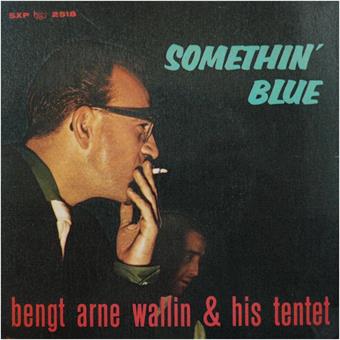
I just heard from my Stockholm-based friend, Guy Jones, founder and president of Friends of Jan Lundgren, the fan club of pianist Jan Lundgren, that legendary Swedish trumpeter Bengt-Arne Wallin passed away on November 23. He was 89 years old, and even though he's far from a household name in the United States, he devoted his whole life to music and was extremely well respected in Scandinavian jazz circles. Born in Linköping, Wallin showed an interest in music at an early age and concentrated on the trumpet and the flugelhorn. He spent much of the 1950s and '60s playing and recording alongside such European jazz luminaries as Arne Domnérus and Lars Gullin, and when American tenor saxophonist Benny Golson made some recordings with Scandinavian jazzmen, Wallin was one of the musicians who were called in for the sessions.
Like pianist Jan Johansson, Wallin became interested in exploring the relationship between Swedish folk music and jazz, and his recordings in this vein garnered him much acclaim in his homeland. Besides his work as a trumpeter, Wallin was also valued as an arranger and composer (he wrote music for films and TV productions), and he also spent two decades as a music teacher at Stockholm's Musikhögskolan. Throughout his long and successful career, Wallin acted as mentor to younger musicians such as trombonist Nils Landgren, who, upon hearing of Wallin's passing, called him "my greatest mentor, both as a musician and as a human being." Pianist Jan Lundgren also remembered Wallin on his Facebook page, reflecting on how thankful he was to have had the chance to work with the great trumpeter, whom he considers "one of the finest arrangers we have had." I must admit that the only recordings I've ever heard by Wallin are the ones he made in 1959 and 1960 as part of an octet led by saxophonist Lars Gullin, which can be found in the Gullin 4-CD set, Portrait of the Legendary Baritone Saxophonist: The Complete Recordings 1956-1960 (Fresh Sound Records). On these, of course, Gullin is the star and the spotlight is mostly on him, but Wallin comes across as a very dependable accompanist in ensemble passages, and on "Blue Mail" and "Baritonome," for example, he even gets to contribute some highly original, exciting solos that make you wish he'd been featured a little more prominently. On the strength of these sides alone, there's little doubt that Wallin is a musician whose recorded legacy is worth exploring further.